There is only one option for the Collapse of Iran By Hafeez Hassanabadi
- Get link
- X
- Other Apps

There is only one option for the Collapse of Iran
If, after this war, Iran continues to exist under the same leadership and within the same geography, it will remain a headache for the region and will turn into a “brain cancer” especially for the Gulf Arab states, particularly the Gulf Cooperation Council (GCC).
By Hafeez Hassanabadi
Some people say that American politics is difficult to understand, but in my opinion, to understand it, watching World Wrestling Entertainment (WWE) is enough. There, all the rules seem to exist, but inside the ring there is no law. Anything goes, cheating as much as you want is acceptable. Several wrestlers gang up on a strong opponent, beat him, then place a half-dead opponent on his chest and have the referee declare him the winner. Sometimes someone comes from outside, knocks out the referee and throws him out of the ring. During the match, partners abandon their opponents and start fighting each other. Countless such violations happen, and everything is allowed. American politics is exactly like that: it can break rules at any time, stab you in the back even while standing beside you and can run away from the field while still declaring victory.
Since World War II, as a superpower, the United States has acted in this same lawless manner—intervening around 95 times in different countries through coups, regime changes, election interference, proxy wars, CIA operations and civil conflicts. This began in 1948 in Italy when communists were defeated through CIA intervention, and it continues to this day, now reaching the attack on Iran.
After Italy, such actions have occurred in countries including Syria, Iran, Guatemala, Albania, Egypt, Indonesia, Laos, Ecuador, Iraq, Andorra, Angola, Bolivia, Cuba, Honduras, Brazil, Cambodia, Afghanistan, Argentina, Uruguay, Chile, Nicaragua, Vietnam, Seychelles, Ghana, the Dominican Republic, Panama, Yugoslavia, Libya, Haiti, Georgia, Kyrgyzstan, Ukraine, Venezuela, and others. In many of these countries, interventions happened multiple times. Interestingly, most of these efforts either failed or did not achieve meaningful results.
Among the latest mistakes are the rushed withdrawal from Afghanistan, provoking Russia into war through Ukraine, detaining Venezuela’s elected president along with his wife and bringing them to the United States and making statements about incorporating Canada and Greenland into the U.S. Seeing this endless series of mistakes, it seems as if Mr. Trump is not the leader of a country like the U.S. but rather someone who has escaped from a mental asylum, making irrational statements and taking reckless actions.
The wrong timing and method of attacking Iran:
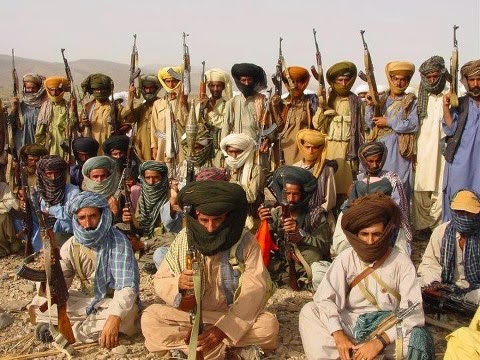
For the past 47 years, Iran has faced numerous sanctions. These have made life miserable for ordinary people but have not affected the rulers. Oppressed nations including Kurds, Baloch, Arabs of Al-Ahwaz, Turkmen and others have suffered even more compared to Persians. This is why large protests against the clerical regime have repeatedly occurred, where thousands were shot, hundreds of thousands imprisoned and many executed. Unfortunately, none of these protests succeeded.
The reasons are clear: despite the desire for change, there is no clear future charter/road map or leadership. In simple terms, the crowd may overthrow the regime, but who will lead afterwards and what system will replace it remains unclear. Secondly, oppressed nations involved in protests are unsure of what they will gain? Will the currently oppressive mullah be replaced with murderous Shah’s son, or will there be a democratic system? Or will they, like Pakistan, be deceived by false promises and gradually stripped of their rights and Red Indianized, leaving them as beggars or spectators? gradually stripped of their rights?
History shows that crowds can destroy, but they cannot bring revolutions. The U.S. has repeatedly led people to believe it supports them, but each time they rise, they are met only with bullets, imprisonment and failure—leaving them weaker and the regime stronger.
What the U.S. should have done 20–30 years ago, it is attempting now with help of Israel, at a time when Iran is fully prepared for prolonged war and has support from Russia and China. Meanwhile, Mr. Trump lacks even the support of his allies. The Ukraine conflict has already strained Europe’s economy, causing inflation, energy crises and hardship for ordinary people. The U.S. itself is deeply in debt in 49 Trillion Dollar.
The Gulf Cooperation Council countries (Saudi Arabia, UAE, Kuwait, Qatar, Bahrain, Oman), despite investing trillions in the U.S., buying weapons and hosting military bases, are now paying the price. Instead of enjoying stability, they face economic uncertainty and the U.S. is even asking them to bear the costs of this war.
Just as Ukraine was pushed into war based on flawed assumptions, here too, instead of understanding Iran’s internal dynamics and forming a coordinated regional strategy, decisions were based on unrealistic expectations tied to the Shah’s son. It was assumed that once the regime was removed, people would rise, as in Iraq or Libya. But Iran is not Iraq, Libya, or Venezuela.
Sanctions have made Iran resilient. Repeated failed uprisings have weakened public confidence. The figure being promoted as a leader, the Shah’s son (Reza Shah), has little real influence. Despite media promotion by Iran International, Man and Tou television and to some extent BBC Persian and dozens of other websites and blogs etc, he lacks a credible plan or support inside Iran. He and his team are cut off from the people. They have no viable and credible program or manifesto to hold the current Iran together except for rhetoric.
Another major opposition force, the Mujahideen-e-Khalq, once had capacity for armed struggle but suffered heavily after Saddam Hussein’s fall, facing attacks by Shia militias and eventually dispersing, with many ending up in camps in Albania.
Within Iran, political activity is almost nonexistent. The activities that do exist at present are mostly outside the country, and apart from the Shah’s son, they are divided into two groups.
One group, called “Front of Nations for Self-determination”, represents oppressed nations and seeks complete independence from Iran. This includes Kurds, Baloch, Arabs, Turkmen, Azerbaijanis and others.
The second group advocates for establishing a federation within Iran and granting rights to different nations while remaining part of the country. Although various pro-federation parties of different nationalities are united under the banner of “Congress of Nationalities of Federal Iran,” there is a sense of uncertainty among them. This uncertainty stems from the fear that if they all succeed in removing the current regime from power and establish a new government led by Persians, there is no guarantee that the promises made to them will actually be fulfilled.
This is because they have already suffered deceit by trusting Mullah Khomeini in a similar way.
From this perspective, the stance of those who seek full independence appears more compelling and practical. However, there is deep mistrust—especially after past betrayals. Although those seeking independence appear more determined, but success depends on whether global powers, especially the U.S., genuinely support them or once again impose a puppet leadership. The pro-independence groups need strong assurances of support and long-term trusted alliance who continue the friendship and honour the promises made to them, if any.
Post-war Iran:
After 30 days of war, it is becoming clear that the U.S. and Israel have not defeated Iran. However, they may still cause destruction and economic damage. If they leave Iran in a weakened but not defeated state, it could become even more dangerous, having nothing left to fear. This may also signal the emergence of a new world order where the U.S. is no longer dominant or in driving seat.
So what should be done? The war was started too late, at the wrong time and with the wrong strategy. Now, correction is only possible by taking it to its logical conclusion. Arab countries rightly demand that the U.S. finish what it started—because an unfinished conflict would leave them facing a long and exhausting confrontation with a wounded Iran.
In this difficult and discouraging situation, one hope remains: fully supporting (diplomatically, politically and militarily) the legitimate independence movements of nations, currently occupied by Iran but have long been struggling to break free. What the U.S. and Israel could not achieve, Kurds, Baloch, Arabs, Turks and Azerbaijanis might achieve through determination and sacrifice.
The U.S. and Israel must accept that their strategy was flawed. Then, by correcting their mistakes and working with regional forces, they should support these movements of oppressed nations until full independence is achieved, leading to the fragmentation of Iran into separate states and the permanent end of a centre of global terrorism.
- Get link
- X
- Other Apps

Comments
Post a Comment